
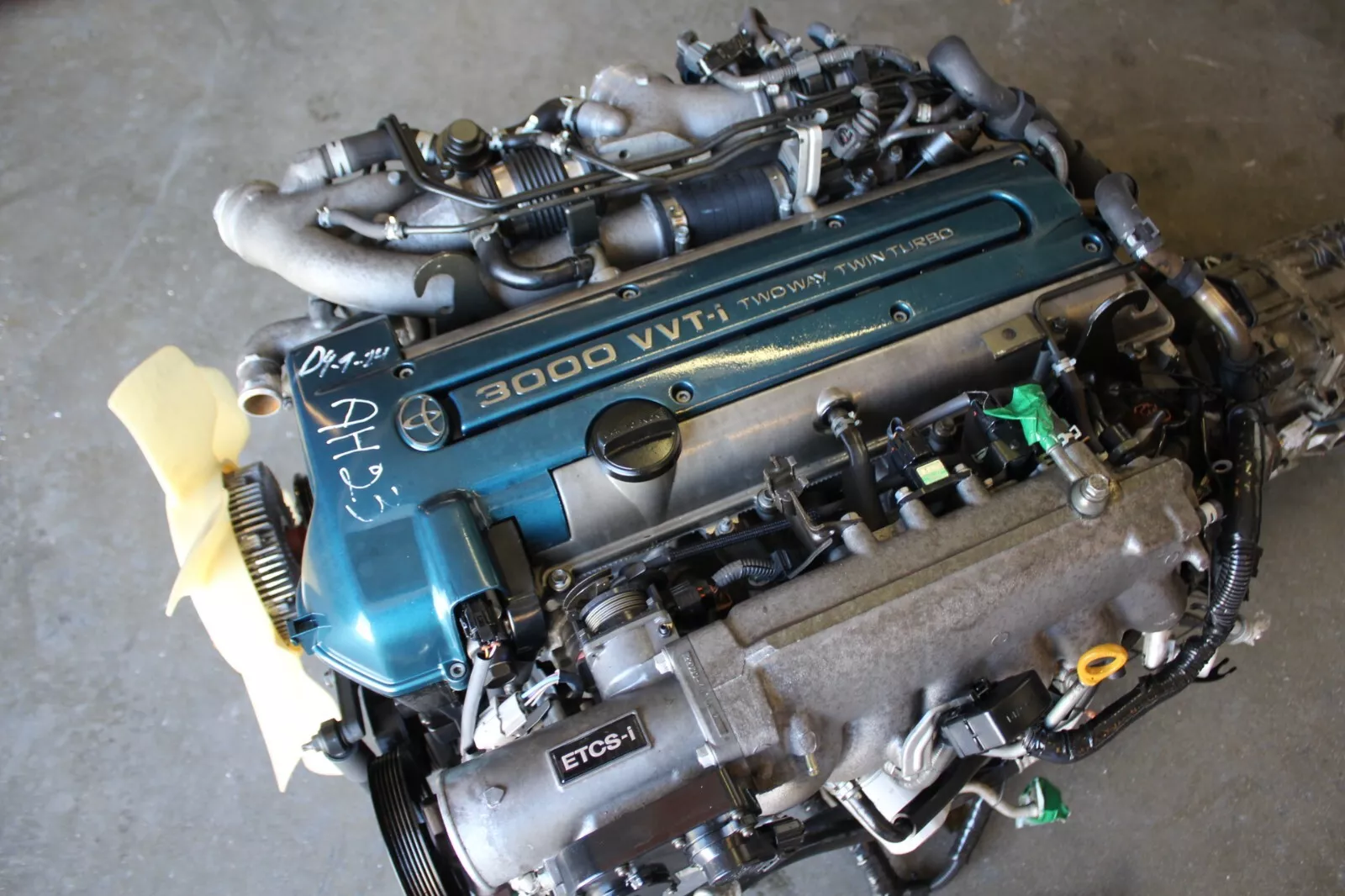
The 2JZ-GTE, often searched as 2JZGTE, is the twin-turbo version of Toyota’s 3.0L inline-six, best known from the MkIV Supra Turbo and the JDM Aristo. The 2JZ-GE is the naturally aspirated version of the same engine family, found in the non-turbo Supra, Lexus SC300, GS300 and IS300. Buy the GTE if you want factory turbo hardware and a bottom end built for boost. Buy the GE if you want a durable, affordable inline-six for a replacement or a budget turbo build.
Both are excellent engines. The price gap between them is large, though, so it pays to know exactly what you are getting for the extra money.
What the two engines share
The 2JZ-GE and 2JZ-GTE are both 3.0L inline-six engines with a cast iron block, an aluminum head with double overhead cams and a timing belt. The basic block design is shared, which is why the 2JZ has a reputation for strength across the family. The iron block, the inline-six layout and the generous design margins are a big part of why tuners trust it.
Both were built with and without VVT-i over their production run. Toyota added variable valve timing on the intake cam to later engines, so a 2JZ can be non-VVT-i or VVT-i regardless of whether it is turbocharged. That detail matters when you match an engine to an ECU and harness.
What makes the 2JZGTE different
The turbo engine is not just a GE with turbos bolted on. Toyota changed the parts that see heat and pressure:
- Twin sequential turbochargers: one turbo works at low rpm, and the second comes in higher in the range for a broad power curve.
- Lower compression ratio: the GTE uses different pistons that lower compression to suit boost.
- Piston oil squirters: jets spray oil under the pistons for cooling.
- Intercooling and turbo plumbing: the intake, exhaust manifolds and related hardware are specific to the turbo engine.
- Turbo-specific engine management: injectors, sensors and the ECU are matched to the turbo setup.
Japanese-market cars were advertised at the 280 PS figure that Japanese makers observed at the time, while US-market Supra Turbos carried a higher published rating. Exact output depends on the market and year, so check the specific listing or Toyota’s published data for a given engine.
Why buyers choose the 2JZ-GE
The 2JZ-GE is the smooth, reliable engine that powered a long list of Lexus and Toyota sedans and coupes. For a replacement in an IS300, GS300 or SC300, it is the correct engine, and it costs far less than a GTE.
It is also the starting point for what tuners call an NA-T build: adding a turbo kit to a naturally aspirated 2JZ-GE. The shared block makes that possible, but the GE keeps its higher compression pistons and lacks the oil squirters, so a careful tune, fuel system upgrades and realistic boost goals are part of the deal. Some builders use a GE as the base and swap in GTE parts over time. Plan the full parts list before you decide this is cheaper than buying a GTE.
2JZ-GTE vs 2JZ-GE comparison
| 2JZ-GE | 2JZ-GTE | |
|---|---|---|
| Induction | Naturally aspirated | Twin sequential turbochargers |
| Common applications | Supra (non-turbo), Lexus SC300, GS300, IS300 | MkIV Supra Turbo, JDM Aristo |
| Compression | Higher, for naturally aspirated use | Lower, for boost |
| Piston cooling | No oil squirters | Oil squirters |
| VVT-i | Non-VVT-i and VVT-i versions | Non-VVT-i and VVT-i versions |
| Typical buyer | Replacement or budget turbo build | Swap, Supra restoration, high-power build |
JDM 2JZGTE engines: what usually comes with them
Most 2JZ-GTE engines on the market are JDM imports, often pulled from the Aristo. They are frequently sold with the engine harness and ECU, and sometimes with the automatic transmission the donor car used. That package can save you a lot of time, because a matched ECU and harness is the hardest part of a swap to source later.
Examples include our Toyota 2JZ-GTE engine and the 2JZGTE VVT-i twin turbo engine with automatic transmission, harness and ECU. Read each listing to see what is and is not included, and our guide to complete engines vs long blocks explains how to compare packages fairly.
A few things to confirm on any 2JZGTE you are considering:
- VVT-i or non-VVT-i, and whether the ECU matches.
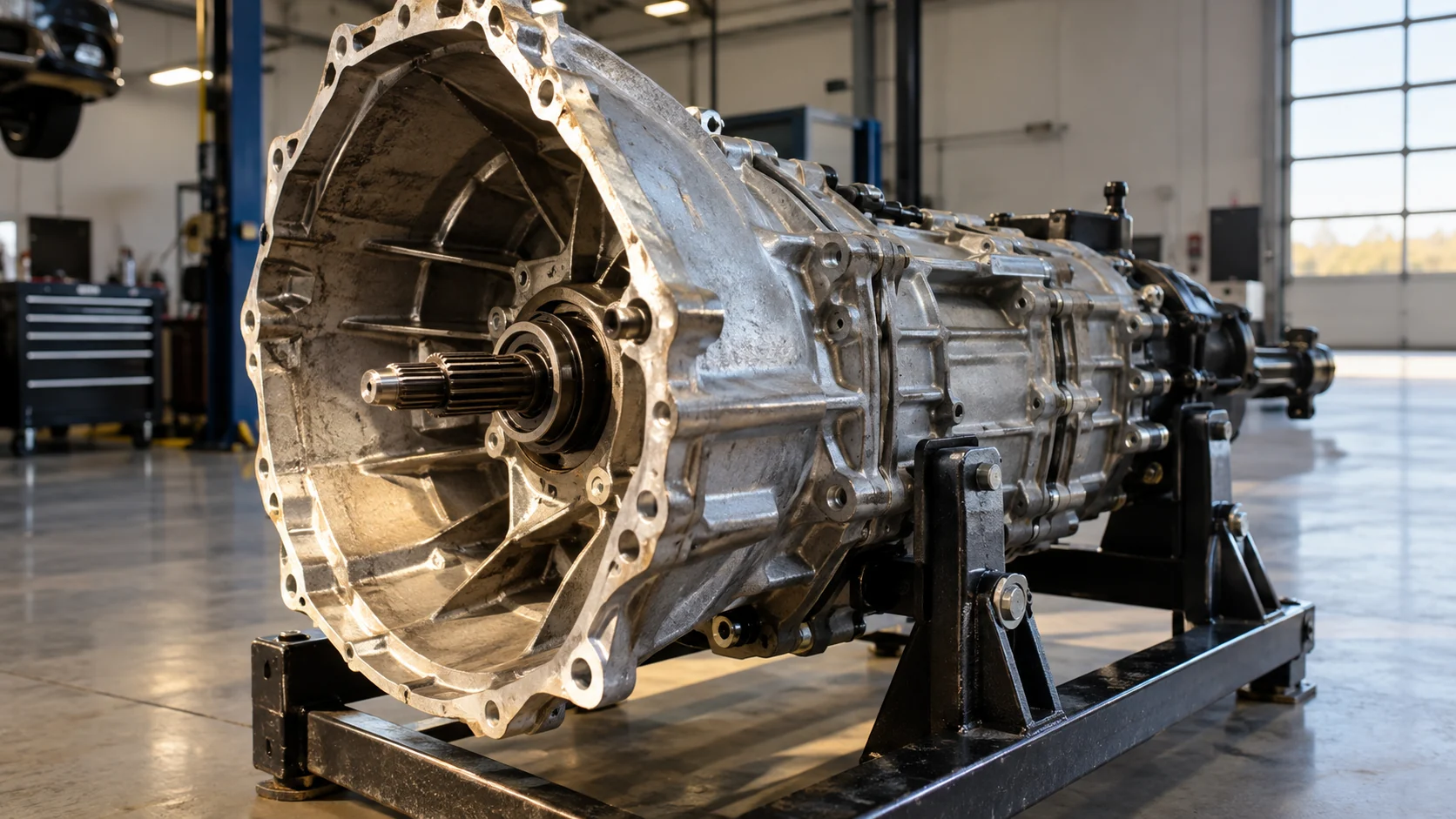
- Which transmission is included, if any. Aristo engines usually come with an automatic, and a manual conversion is a separate project.
- Whether the turbos, intake and manifolds are present.
- Timing belt history. Plan on replacing the belt and water pump before you run it hard.
- Compression or leak-down test results when available.
Replacement 2JZ-GE engines
If you own a Lexus with a tired 2JZ-GE, a replacement GE is the right buy. Options include the 2001 to 2005 Lexus IS300 2JZ-GE VVT-i engine and the 1998 to 2005 Lexus GS300 2JZ-GE VVT-i engine. Match the year range and accessories to your car, since intake, sensors and accessory brackets can differ between models.
Plan the whole swap, not just the engine
A 2JZ swap into another chassis brings mounts, transmission, driveshaft, cooling, fuel system, exhaust and wiring costs. A turbo build adds an intercooler, oil and coolant lines and tuning. Use our engine project budget guide to list those costs before you order. The 2JZ is heavy for its size, so use a rated hoist and engine stand when you handle it.
If the car will be registered for street use, check your state emissions rules and the EPA guidance on engine changes before you begin.
Shopping for a 2JZ engine
Browse our Toyota replacement engines to compare 2JZ-GTE and 2JZ-GE options, or see the full range on our Toyota brand page. For factory model information, visit Toyota.
Frequently asked questions
Is a 2JZGTE the same as a 2JZ-GTE?
Yes. 2JZGTE is just the engine code written without the hyphen, which is how many listings and searches show it.
Can I turbocharge a 2JZ-GE?
Yes. It is a popular build called NA-T. Because the GE has higher compression and no piston oil squirters, keep boost conservative, upgrade fuel delivery and get a proper tune.
Does a VVT-i 2JZ work with a non-VVT-i ECU?
No. The ECU must control the VVT-i system. Match the ECU and harness to the engine, or use a standalone engine management system.
Which cars came with the 2JZ-GE?
Common examples include the non-turbo MkIV Supra, Lexus SC300, GS300 and IS300. Check the engine code on the block to confirm.
 Start with the right reference
 Plan the arrival
Always confirm the exact model, part number, condition and included components on the product listing. For a compatibility question, contact TorqueHarbor before ordering.