
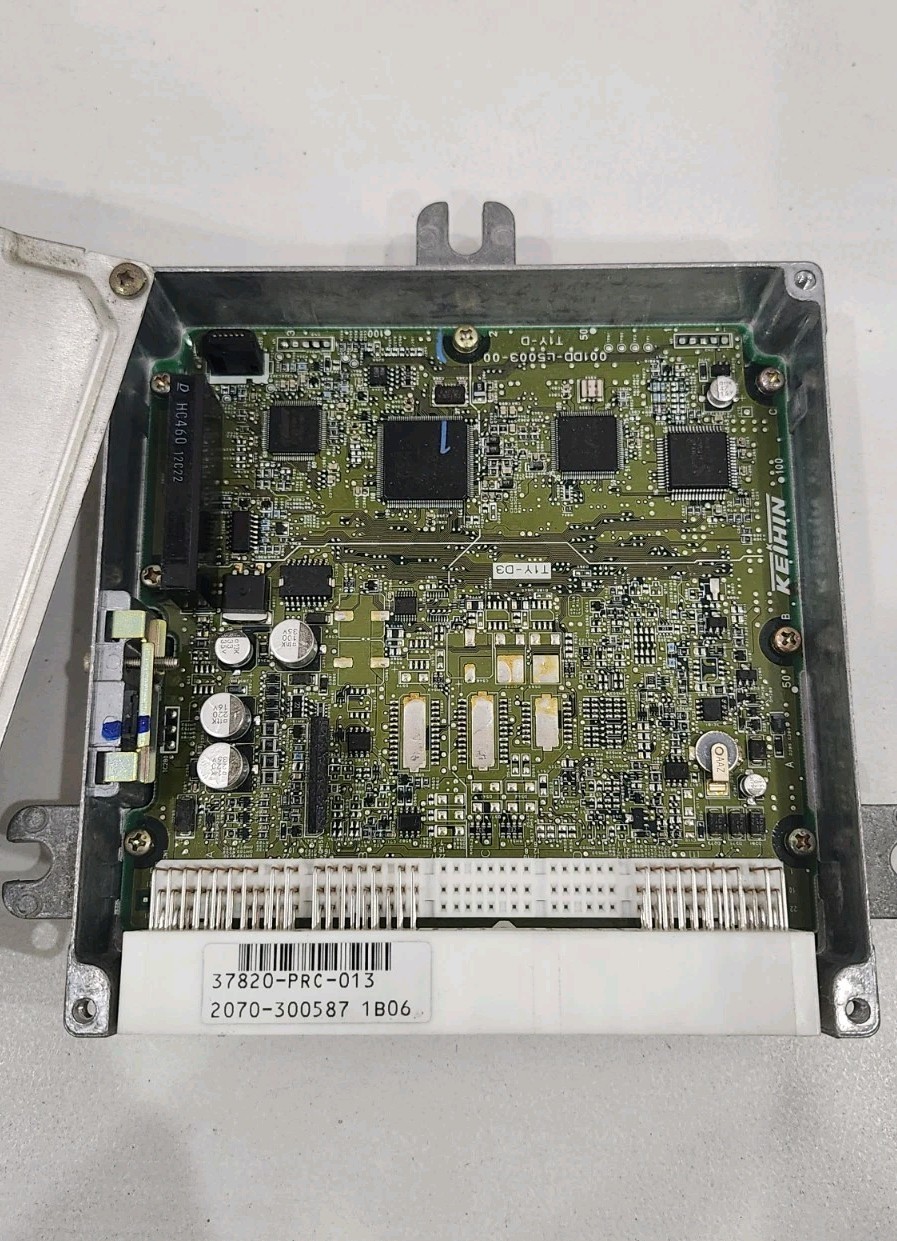
An engine control module can look similar to another unit while having different identification or setup requirements. When shopping for an ECU, begin with the diagnosis and the complete label on the existing module. A year-and-model match alone is not enough to make a reliable buying decision.
If the original label is damaged or unreadable, tell the seller and technician. Ask the technician to establish the required identification through the appropriate vehicle records instead of ordering from a partly guessed number.
Document the fault and the original module
Ask the technician to explain why replacement is recommended and what checks support that conclusion. Save the diagnostic information with your project notes. Replacing a module without understanding the fault can leave the original problem unresolved.
Take a clear photograph of the entire existing label and record every relevant identifier, including suffixes. Keep the VIN, engine, transmission, market, and modification history with it. Do not shorten a part number in an enquiry simply because the first group of digits looks familiar.
Compare identifiers before appearance
Check the listing’s written number against its photographs and your original label. If a number differs, ask for the documented basis of the proposed replacement. A claimed supersession or interchange needs confirmation for the actual vehicle; matching connectors or a similar casing should not be treated as proof.
The parts-listing guide shows how to compare a title, description, identification photograph, and included components without overlooking a conflict.
Confirm the setup work with the installer
Ask whether the proposed module can be configured for the vehicle and what equipment or specialist service is required. Discuss any relevant programming, immobilizer, key, or other module-pairing requirements with the technician. These requirements depend on the application, so do not assume that every used ECU is plug-and-play.
For Toyota vehicles, Toyota Technical Information System provides an official route to applicable service information. The correct manufacturer documentation and installer assessment should guide the decision for the vehicle in front of you.
Check what the offer includes
Read the condition description and any declared testing or faults. Confirm whether the offer is for one module or a stated matched package. Photographs of additional parts need written clarification if the description does not include them. Do not assume that software, keys, or programming services are part of a hardware-only listing.
Budget for the complete repair
Include diagnosis, the module, delivery, installation, and confirmed setup costs. Review the returns terms before ordering and discuss handling requirements with the installer. Browse automotive parts, then contact TorqueHarbor with the exact listing and identification details when a product fact needs clarification.
Where should I look for the ECU part number?
Photograph the identification label on the original ECU and record every part number, suffix and hardware or software identifier that is visible. Compare those details with the replacement listing and the manufacturer’s application information. A matching case or connector shape does not establish that the electronics or programming are compatible.
Before choosing ECU parts and tuners, ask the installer whether coding, immobilizer pairing or additional components are required for the specific vehicle.
 Start with the right reference
 Plan the arrival
Always confirm the exact model, part number, condition and included components on the product listing. For a compatibility question, contact TorqueHarbor before ordering.